Mostrando entradas con la etiqueta Interviews. Mostrar todas las entradas

lunes, diciembre 31, 2012

The Time Travellers and the Musicians

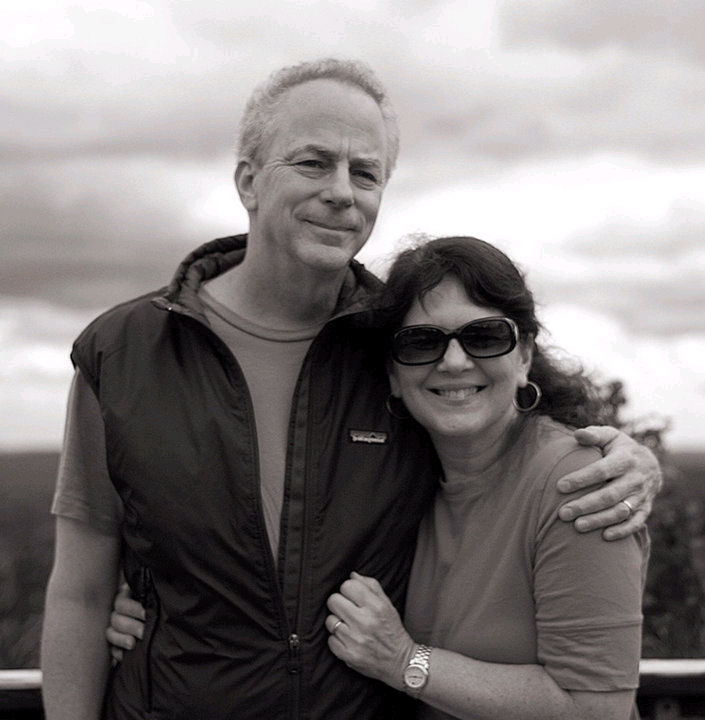
The world of Aerial Phenomena is too a world of music and musicians. That is why a tribute to some of its creators is so terribly appropriate. But Roberto Bugiolacchi is perhaps not your regular songwriter.


Shortly after finishing my short tale Redención (Redemption) on a Spanish soldier of fortune living in the XVI century, I decided to give Alonso —its main character— a second chance in a fantastic sequel that would throw him into the future up to the present time, and then back to the XVI Century looking for a way to amend a broken love promise. When Viajeros del tiempo (Time Travelers) was written, "Promises" —a song contained in Psychedelic Love, British singer Baz’s only album— was playing accidentaly somewhere around, and just seemed to fit perfectly as a listen along recommendation. But to find more information about the song was not an easy task, and the first clue seemed so wrong… Someone named Roberto Bugiolacchi, an Italian planetary geologist!

But it turned out to be the right one and that’s how I came across this extraordinary personality that reminds me one of those Leonardo da Vinci (or should I say Galilean?) men from the Rinascimento —even physically!—, able to address just anything related to science or arts without almost no distinction. I can see no better connection between my own interests and those of Roberto, so the idea to contact him came naturally. Then, his own good humored kindness did the rest in making this short review to his career, motivations and visions possible.

—Robe, you are owner of an extensive production of science papers and songs, and it’s obvious you have passion for both fields, but how did all started? Tell us a bit about your life.
—Science was one of my main interests when young. I remember one of my most cherished possessions was my cousin’s Apollo mission book. I was also an avid consumer of Marvel Comics products, fascinated by all those inventions and pseudo-scientific subjects. When older, apart from a very brief liaison with the ‘paranormal’, soon moved on to reading Scientific American magazine (in Italian of course) pretending to understand its content!
The available undergraduate studies of my area did not offer a viable course of studies on scientific subjects, so I ended up with an economic studies diploma!
As per music, it was almost inevitable: the Italian towns of Castelfidardo and Recanati in central Italy are the center of music instrument production in Europe, with seminal manufactures such as ELKA, CRUMAR, FARFISA, and Paolo Soprani. EKO was the largest of these factories, founded by my uncle in the sixties and where my father worked at a management level. So, my house was filled with instruments of all kind… but crucially, the whole area was awash with budding pro musicians trying to make a name for themselves in a fierce, but healthy, competitive spirit. Top virtuoso local guitarists found some international fame, including Antonio Forcione and the late Augusto Mancinelli.
Encouraged by the many Italian top acts that were visiting the EKO factory at that time, from PFM to Bennato, I started taking music more seriously and, soon after learning my first simple chords on guitar and organ, I began writing my own music.
—A fellow Moon Zoo member —an all-volunteer endeavor aimed to classify moon images commanded by renown Scientifics— described you as “… yet another lunatic musician, he shares his time between multispectral data and multitracking his own 'compositions'. Social life an often neglected option and forgotten art…”. How do you see this depiction?
—Correct, since I wrote it! As one can imagine, trying to gain a doctorate while working as a supply teacher, recording my own CD and working in professional music projects at the same time (i.e. Baz) took a toll on anything resembling a normal and fulfilling personal life, by keeping me away from my extended and growing family (in Italy) and from creating one of my own.
—I know you admire enshrined stars like Gino Vanelli —if so, I can’t but agree— , but also less known talents as Eduardo de Crescenzo. What are your true musical roots?
There is not a lonelier place than in front of thousand of adoring fans while backstage your wife is not there or has left you.
Roberto Bugiolacchi
—Well, you know, when you are dreaming of becoming a ‘pro’, you always toy with the idea of someone one day interviewing you and asking this question! Chronologically, my early taste gravitated towards a few key poles: Santana, PFM, Pino Daniele, and Genesis. Soon this was followed by Weather Report, Gino Vannelli, George Benson, Michael Franks, the Police and Sting, etc. Obviously, I can’t list all of the musicians/music I liked, such as a couple of songs from the Bee Gees, Claudio Baglioni, Chic, Prefab Sprout, etc. even Eduardo de Crescenzo! But with these examples one can already extrapolate what other music I might be attracted to! I wish you asked what musicians I hate… more fun ;) !
—According to your Myspace, you have worked with Vangelis, Ola, Baz, Terri Walk… What is your experience working with full time musicians? How do they differ from other mortals?
—If you intend ‘mortals’ as talented, but ‘amateurish’ musicians, there is no easy answer. Two common denominators though: focus and strong belief on one’s abilities and products and… favorable circumstances, i.e. luck. Most of these people think that they were sent to earth by a God or whatever as a mission to entertain the rest of us. “It’s their ‘gift’ to us”, and sometimes, their tribulation… The day to day professional life, which I joined at times, works in peaks and troughs… One day on tour earning good money and chased by fans, and the other sitting next to the phone waiting to hear if the record company has enough money to promote your latest CD, and then uprooting yourself for months and living in cheap hotels and coaches. It’s not a life for the fainted at heart and mostly, of much glamour!
—Love keeps a central place even for a full-fledged scientific mind like yours in many of your song lyrics. Where do you keep getting inspiration?
—Life, like everyone else’s. People involved in ‘creative’ occupations suffer with complicated personal relationships, as mentioned above. This is why famous people that we all superficially envy for their success and wealth, more often than not commit either slow (drugs) or straight suicide. Fame and fortune cannot, for most ‘normal’ people, fill a gap that lost love opens. There is not a lonelier place than in front of thousand of adoring fans while backstage your wife is not there or has left you. Ask Phil Collins. And to end on a sickening cliché, really, loving and being loved, hopefully contemporary, is what life is all about. The rest is garnish.
—Now on this particular song, Promises, you know I have been unable to locate its lyrics and had to ask for help in order to transcript them. What is your contribution to this album and to this particular song?
—Well, Baz project started just as ‘another’ (guitar) studio session; her management company was putting together a high-quality demo to entice record labels to sign her. Artistically, we ‘hitted it off’ immediately and started recording new material, based on her lyrics. By the end, all songs but one on her album were co-written by , including the singles "Smile to Shine" and "Never Ending Story". I also did some preproduction for the album, but, rightly so, the helm of production for the CD was handed over to Guy Sigsworth, a famous producer who had just finished recording and writing with Madonna. The promotion of the album then focused on live radio and road shows featuring just Baz and me on acoustic guitar.
—As a science man, what are your most thrilling achievements?
Both science and music professions share an exiting but also uncertain path: they both progress (when lucky!) from contract to contract and they hardly follow a predictable course. Failure and success are often left to chance. We can only try and do our best and hope for a benign fate!
Roberto Bugiolacchi
—Well, thrilling is a big adjective! I suppose the ‘thrill’ for me, and most people developing original scientific work, is to have one of your own publications referenced by colleagues. Talking at prestigious conferences is also an almost show-business experience, especially in the US. I did a few in front of people who worked on the Apollo mission; in particular last year I gave a talk on the same campus in Houston where the astronauts lived and trained. I closed a circle there, which had started, as said, when I was a young boy.
—As an educator, you love to teach, and it shows in projects like Sound Base Studios. How do you envision music education as a tool for personal development?
—Well, music has been used as a didactical tool since time memorial. On a personal note, I cannot enjoy new knowledge that I acquire without passing it on and sharing it… I am one of these guys (or bores?) who find it pleasurable to tell people that July and August names come from Julius Cesar and Augustus …
Since I was a boy ‘why’ was my key word and I always tried to explain to myself how things work, especially the human mind. And the first journey I took, and still ongoing, was trying to understand myself, why I felt what I felt, behaved in a certain way, or what made me tick. The key to understand the world is to understand oneself, even if some of the findings and the journey itself might be less than pleasant. Curiosity is the key word. Promote curiosity and questioning should be the priorities of any educator. Facts can be absorbed later. That is what differentiates us from computers. Am I rumbling? It’s a difficult question to answer.
—As an amateur astronomer myself, I wonder a question: Do you belong to any astronomy club or do anything related to astronomy beyond your professional studies?
—I am afraid not. Planets fascinated me most, unsurprisingly the Moon first, and I neglected in my interests the rest of the firmament. Nonetheless, one of the key spurs to science was attending an astronomy evening held by the local nuns when I was young! Inspiration may come from unexpected sources…
—As a music player and producer, what are your plans?
—Well, I have just come back to the UK after four years in Germany, and I am now re-establishing contact with some of my colleagues and friends of past. I am recording a CD of new and old songs of mine with a strong Latin feel, helped by some great drummers and percussionists. Also, I will be soon start working again with a very talented singer called Amra, whom I recorded many great songs in the past, but lost contact for a few good years.
I am also toying with the idea to release Italian versions of my songs, since I have lyrics in both languages… we shall see!
At present I am continuing my lifelong quest of finding a collaborator/producer to unburden me of onerous task of writer, performer, arranger, producer… and having the chance of just concentrating on the writing and singing… But finding a good producer has turned out to be the hardest thing around: either people are very bad and amateurish, or forbiddingly expensive talented pros (very few)… hmmm.
—As a professional grade guitarist —a really good one—, you keep looking like pure energy singing and playing. How good would it be for myself or anyone to be able to express their feelings, to speak their minds out through music, creating or just playing it. Do you use music for that?
—Absolutely. Singing while strumming a guitar is pure therapy for me. It’s a primordial shout when life steam builds up a bit too much… a release valve. Highly, highly recommended to anyone. Go for some physical exercise, run for instance, then sing (or shout, it doesn’t matter) a few tunes, take a shower… life becomes manageable again!
—You are fluent in English, but also able to speak Spanish… Do you know Spain? Do you think we —the southern countries— are going to make it in this debt crisis?
—A political question! My Spanish is very basic, although for years I have been meddling with Spaniards and picked up a few expressions here and there… Love the language and consider it a kind of Italian dialect, and vice versa, of course!
As per us Latins… we have lived above our means for too many years, enriched ourselves beyond our resources, unnecessary millions of jobs in the public sector, pensions at 50, etc... Add an inept political system and family-rooted selfishness (a weak sense of common good) and here are the main causes of some of our deep financial problems. Are we going to heal? We could be out already if we give up most of the greed and materialism that we got accustomed to. Most people can still afford one small car, a fridge, and basic food. If we forget about BMW, iPads, and other unnecessary toys, and clamp on those primordial urges of acquiring more and more material goods, then we can live happier lives, even in time of crisis. Just passing thoughts…
—Now for something lighter… What kind of music could we find in your player as of lately? What do you recommend us to listen?
—Ohhh, big question. My MP3 player has everything from classical to jazz to dance. What you will NOT find in my player is HipHop or any kind of ‘Urban’ – loops oriented music.
One CD I strongly recommend is Goldfrapp’s Felt Mountain, from 2000. Classical, experimental, dance, jazz, and killer tunes. Intelligent and creative. A little-known classic.
—Yes, I second that recommendation. I'll have to catch Alison Goldfrapp one of those days for an interview! Robe, do you intend to keep combining your scientific career while adding songs to your catalogue or maybe jump to some other multimedia fields of expression? I am sure it’s getting tempting for someone already familiar with imaging technologies. Where is Roberto Bugiolacchi going?
—Ahhh, where is ‘RB’ going? Great question, difficult for anyone to answer, as we know, life is like a meandering river that can switch course by exceptional events. Or even mundane ones… Both science and music professions share an exiting but also uncertain path: they both progress (when lucky!) from contract to contract and they hardly follow a predictable course. Failure and success are often left to chance. We can only try and do our best and hope for a benign fate!
As per multimedia temptation, throughout the years I have already spread my finite, very finite talent thinly across too many fields… but never say never… we shall see! If there are any budding video/movie artists out there… please do get in touch for collaborations!


Robe owns a vast list of songs and science papers. Check http://www.bugiolacchi.com, http://www.science.bugiolacchi.com and http://www.soundcloud.com/bugiolacchi for more.

Photos courtesy Roberto Bugiolacchi.


jueves, noviembre 22, 2012

Music from the Trenches

You know how much music matters in each of my tales. A song provides the right key and rhythm to the action and conveys much of its emotion. This is the story of one of them...


Listening...
... But probably it will be better to start from the beginning: Some months ago I discovered Sepiamusic on the Chilled Out channel at 181.fm. This internet radio station keeps playing some of their songs on a daily basis and two of them —"Sweet Pollution" first and then "Stone"— totally amazed me. Shortly after my first auditions, I wrote a short romantic tale based on World War I, featuring impressionist Otto Dix’s artwork along with "Stone" as ending title. The combination proved so powerful that I knew I had to contact the talent behind the song.

It turned out to be Michael Adler Miltersen —a very busy Danish artist and businessman— to be Sepiamusic's alma mater and its author, but luckily kind enough to find some time to make a stop for Aerial Phenomena and talk about "Stone", his world and the future ahead.

—Michael, your name has been linked with the advertising business but, at some time, you decided to start a network to recruit talents and produce music, Sepia Productions, and then it came Sepiamusic. Is it so? What was your musical background then? Why did you choose the word Sepia as a brand? —It sounds to me like an old time photographic look…What were your plans for Sepiamusic back then?
—Well, first of all, thanks for contacting me, and for liking the stuff I do. I really appreciate that. As to how it all got started —it actually happened in a different order than what you mentioned in your question. But you got the basic outlines right.
It's true that I was in advertising for many years. I have been passionate about music since I was a child and I grew up loving and needing music, and went to a school where I was allowed to learn music from a very young age. In my mid teens I sang in a choir at school, but quickly found out I wanted to play the instruments instead. So I was the 13 year old nerdy bassplayer in the background at school gatherings. I eventually switched to the drums, then the keys, and at 15 I was performing Depeche Mode covers at the school stage. In my early teens I was in various bands and at the age of 16 a friend and I  performed live on national TV with the first song I ever wrote. That was a big moment for a teenager.
I grew up in a mid sized danish city with no real music scene, so the very thought of being a professional musician didn't even come up when I was growing up, and had to think about what I wanted to do with my life. And since I was interested in the arts, creativity, drawing and coming up with ideas  —aiming for advertising seemed like the right path for me. I always knew I was a creative nut. So thru my early 20's I made a career in advertising, had quite some success —but eventually the urge to create music grew in me, and after moving to Copenhagen where the music scene was much more vital, I decided to leave advertising and start fresh as a professional musician.
I wanted to make a band. And I knew I needed a singer. So via my brother I met Erin. And that's how Sepiamusic got started. We were initially called Sepia, but we found out there were dozens of bands called Sepia thanks to the search power of the web, so we wanted to change it - but eventually decided to change it to Sepiamusic. After a few years I started Sepia Productions as a production company for our music and some of my side projects, and my former ties to the advertising business actually presented some opportunities to work on some big brands like Nike and Sony. So I teamed up with various talent from my network and friends of friends who were talented. I discovered so much talent around me, and had some amazing sessions with both DJs, singers and musicians. And since then Sepia Productions has been around. That's for 11 years. It's been cool to see how many of those artists I have been working with thru the years who has made a name for themselves and are quite successful today. So in that way Sepia Productions became the foundation to build a real professional studio and the basis for my network, while Sepiamusic was the project everything was built around.
—Prototype, your debut album, was released by the end of 2003. Many of its songs should be considered classic pieces —I will not hide how fond I am of "Ease", for instance—, but again "Stone" has magic of its own. While writing Máscara (Mask), I probably played the song many dozen times as my point of view was flying back and forth over the story sentimental trenches. What did you have in mind while writing "Stone"—Prototype's opening title? What is the concept behind?
—I'm glad you consider some of them classic pieces. I'm not sure I would dare to see it that way, but I am still proud of some of the songs on that album. And some of them I absolutely hate. The songs "Prototype" and "Stone" for sure being the ones that can stand the test of time in my opinion. They are very personal and very emotional songs, and that is what is the key to every good song in this genre. "Stone" was a very personal song for me. I wrote that song in the middle of the night, and it was actually a song about my relationship with my ex-girlfriend. It's a bit difficult for me to explain every feeling in that song, since (like all good songs) it just came out of my soul and practically wrote itself. The story is that I was the one who ended the relationship maybe around 6 months before that song was written. And I remember feeling like I made my heart turn stone cold just before I had to make the decision to seperate myself from her. It was emotional turmoil, but I remember thinking that she, unlike me, was wearing her heart on her sleeve. And I found that admireable and brave. I loved her very much, but I had to let her go because we had different needs and different adventures ahead. If you read the lyrics with that in mind —I think they are pretty self explanatory.
—The cover artwork for Prototype depicts vocalist Erin Chapman in a incredibly sophisticated fashion. What is the story behind that picture?
—Our graphic designer on both albums, Kristian Boserup, made some cool "morphs" of some pictures from a photoshoot, and turned them into these warped spacy objects in a 3D application. We loved that, since we felt we "warped" and transformed ourselves as well thru that album, and we liked the artistic visual expression too.
—Michael, Prototype got very good critics at the time of his premiere, but after some struggling years without a consistent industry response, Erin Chapman and yourself got exhausted and let down by the industry, according to your website. I have seen it many times indeed how disappointing and frustrating  can get  when a really good stuff doesn’t get the deserved reward, but even so you decided not to give up and went on to assemble your second work by the end of 2009, Trenches, remastering three songs from Prototype and adding nine new tracks. Erin Chapman described Trenches as a collection of songs about small cracks and refuges from emotions and the inevitable need to jump out of them to face the battlefield of reality, and this is exactly what "Stone" inspires me. Why did you decide to keep "Stone" as opening title in Trenches? Was solely decision from Quango Records, your American label? Another song I really love is "Prototype", which appears near the end of both albums with his extraordinary powerful and elegant dramatic cut. Did you still feel as a prototype at this stage?
—The decision to add 3 songs from the last album to Trenches was 100% a label request. We actually fought the idea to begin with, but the label felt there was some strong songs they really felt needed a bigger audience. So we had to bow to that argument. So 3 or 4 songs from the original Trenches tracklist was then removed to make space for the older songs, since we didn't wanna release a 15 track album. So those songs that were removed are still not released. But we will soon. We kept "Stone" as the opening track, since we felt it was the absolute best to open the CD no matter how much we switched them around to start with something new. The label and our management had some input on this as well. And yes, it's true we were exhausted after the first album. And we got exhausted after the last one as well. For some reason it's not easy for us creating the music we want.
—I love how dark and sincere your voice and Erin’s sound in "R.I.D.", the 3rd track from Trenches, but what does R.I.D. stand for… ?.
Sometimes I find it to be a bit of a shame to explain a song or a lyric. It's like explaining a piece of art as you walk into a museum space, instead of just looking at it, and doing your best to explore what it tells you. I see music as a feeling, and not a direct message.

Michael Adler Miltersen
Sepia Productions
—Glad you like it. One of my favorite tracks too. And no, not because I sing on it, haha. Hmm... sometimes I find it to be a bit of a shame to explain a song or a lyric. It's like explaining a piece of art as you walk into a museum space, instead of just looking at it, and doing your best to explore what it tells you. I see music as a feeling, and not a direct message. But I will reveal that it's not about love or relationships as some people believe. And notice that Erin and I sing the exact same lyrics to each other. Think of all the tension in the world. That's all I will reveal at this point...
—On Trenches inception, you wrote “… For most bands it’s the classic tale of the difficult second album, but for Sepiamusic trouble came sooner than later, and not only the title, but the album itself speaks volumes about what the two have been going through. And what might even have been a blessing in disguise… “ But there still seems to be a feeling of guilt, though, flying all over this second album… Would you agree on that sentiment?
—I'm not sure if I think there's guilt. But struggle maybe. But that's who we are. Struggle and beauty combined. Melancholy and hope. Dark and light. We always very much about the opposites.
—In your eyes is the only track featuring your voice only, and sounds superbly emotive. I can even notice some Trentemøller’s traces in the background… Do you have any contact with Anders?
—Ha, that's funny that you hear Trentemøller in there. I would think more of old Depeche Mode around their Black Celebration / Music For The Masses days. Could remind me of a track like "Fly On The Windscreen" or Martin Gore's ballads. I never really thought about it until now. And yes. The song is the only song with as a solo vocalist. And the reason it's so emotive, is because the take on the album  —is actually my first take on the song. After I had the basic melody line down and written the lyrics, I just sang it. And when wanting to re-sing it, I found that the imperfections where the beauty of the track. I can still curl my toes when I hear it though. I feel very naked when that track is playing.
But back to Trentemøller. I really dig him. I think he's one of the most talented producers in the world, and I generally don't feel that way about musicians from my country. Being world class that is. He lives in my neighborhood, and I see him around all the time. I met him a few times thru a friend, but I don't know him really. But it's safe to say we travel in the same circles.
—What does the cover artwork for Trenches mean? That was Kristian Boserup’s second contribution to your albums. He’s an incredibly gifted graphic artist.
—Glad you think so, and I will tell him again. Erin and I absolutely still love the artwork. Kristian was very patient with us, because this time around we had a very particular feeling about the album, but we couldn't really figure out what the artwork should be. And Kristian came up with 7 or 8 suggestions over time, but when we saw this one, we just knew that was right. Again, we'd like to think if it as ARTwork, so explainations are hard to make. But here's some words I think of: explosion, space, nature, landscape, flower, mountaintops, land, spikes, poison, fire, energy, beauty.
—You came across with Erin Chapman in 1999 and shared many ups and downs. Have you followed her whereabouts ever after ?
—Absolutely. We are best friends. She's like a sister to me. In fact, I saw her earlier today.
—Bruno Guez, from Quango Records, seems to have understood the quality of your music. In what sense is American public different from Europeans?
—I have no idea. I often notice that 80% of my favorite music in this world is from the United Kingdom. So I would think Europe was a better fit for our music. We had a close encounter with a few record labels in London for a while. But for some reason the USA has been more responsive. And obvously Erin being American has something to do with it. But I have strong ties to the country as well, and I think of it as my second home.
—You seem particularly pleased with people making remixes of your songs. I can now remember DJ Ronin, for instance. But you also made a remix for Sleepthieft… What is more interesting for you about remixing songs?
—I think my love for remixes is back from me listening to Depeche Mode back in the 90's. Back then I remember the Maxi Single was quite popular. Those records came in all sorts of colors, and were often 12 minutes long. Depeche Mode was the only band at that time, who had a lot of remixes released. And remixes is such a good way to work with other artists. Like a tribute. And I must compliment you and tell you, that you really did your research... haha.
—What music are you listening as of lately? Your own listening recommendations… ?
—Lately I have been listening a lot to Apparat —stage name for Sascha Ring— and Moderat —featuring Sascha himself, Gernot Bronsert and Sebastian Szary—. Sasha Ring is a genius when it comes to creating emotional electronic music. My favorite band is still IAMX —Chris Corner's personal project—, and has been for years. Been listening to a lot of ambient electronica like Mount Kimbie, Telefon Tel Aviv and Flying Lotus —Steven Ellison—. I'm changing a lot these days between classic songs and electronic soundscapes. I have a few favorites, but I'm always in constant movement about what type of music I'm listening to.
—I have noticed many of your salient ad works are related to football. Are you a Culé —Barça fan—, too?
—Haha. No. I have to disappoint you there —I'm not into soccer at all. But if I was, I would be a Barcelona fan for sure. Nobody is better.
—What are your plans for the future? Do you intend to stay away from Sepiamusic or may we still have some hope for a 3rd album to be released in the future? "Trenches", the last track from your 2nd album with the same name —and so far your last song—, is a very short, mysterious and optimistically blended instrumental ambient piece. Is it pointing towards a brighter future?
—Currently there are no real plans for a new Sepiamusic album. We felt it was time to take a break, because we never found the proper routine of being a band. It was a constant rollercoaster - and that gets exhausting in the long run. Erin just had a baby (Ruby), and we haven't been in the studio together for a long time. But in a very short time we're gonna release a DELUXE Version of Trenches. With 4 bonus tracks + remixes. Follow us on facebook to find out when.
Lately I have been working with other bands producing, mixing or mastering. I have been travelling every chance I had, and it's very important for me to get inspired for those long studio days. I still work a lot for brands/movies, and this year has been busy. But there is still some new songs brewing from time to time. So I'm sure you haven't heard the last yet.
—That is just the way I want an interview to end, Michael... without an end.

Tak.

"Stone" narrative power was discovered long before Máscara was published. Australian director Keith Loutit —known as the best in the business at timelapse / tiltshift movies (called Small Worlds)— used it to showcase some of his works. Also asked Sepia Productions to come up with music ideas for his new amazing production "The Lion City", featuring the city of Singapore. I hope you enjoy the combined powers of Keith and Michael in this video.

martes, agosto 21, 2012

Nicola Hitchcock: Tales from a Blue World.

...That Summer we talked endlessly
always about everything...

In My Memory, DJ Tiësto

If you happen to be in your 20s, you are probably fascinated by the music from the last bit of the 20th century. It comes not as a surprise. An incredible amount of talent and originality gathered around a crowd of young artists who virtually revolutionized the way music was created and the effect it had in people. Many labels were devised in an attempt to classify their musical styles, but often they would escape any definition and step into new frontiers. One of those persons is Nicola Hitchcock. Singer, composer, multi instrumentalist, member of the acclaimed Mandalay duo, and above all, artist.
It’s also more than likely that some of her songs have got to become soundtracks of your own life. "Like her", "You did a good thing" —a song virtually no one I know seems to dislike even from the 1st play— or "All or nothing" have decorated so many chill out lounges, but also so intimate moments that sooner or later you ask yourself about the person behind. So, when I came across her website, got immediately captivated by her sincerity and decided to take a chance and contact her.
My 1st impression was confirmed: A treasure once lost and waiting to shine again in the sun.


—Nicola, in a now famous definition, David Stubbs, from Melody Maker, described your voice as a ‘fantastic kind of static shudder… so scary beautiful as liquid nitrogen sculpture’. Do you agree with that? Hahaha… But in fact, your voice, your lyrics and your whole musical legacy has evolved over time from pure warm folk tunes to extremely sophisticated concepts. Hey, where is the real Nicola?
—I am here! :) There are many different sides to me... I love Soul and Motown, leftfield musicians and composers and also pure pop... My solo album was released in '93 and the songs for that were written in the late 80s and early 90s... My work with Mandalay began in '95, quite a long time later... My focus for my solo album was to make an album of stripped down, very direct songs in the most straight forward way possible and at the time I thought that would be hiring some great musicians and making it a pure acoustic thing... In it's way the album A Bowl of Chalk was kind of minimalistic, as most of Mandalay's recordings were... So there was a vague connection and follow-through perhaps, even though the vibe and sounds were very different (because of the work of Saul, as sole musician/composer of the backing music)... The ethos of Mandalay was always "less is more"... And I continue on with that leaning and favour that approach even now I am back to being a solo artist...
—But what has been the center of gravity of your whole career so far, Nicola? I mean, what is the fundamental question you have tried to address through your work?
—I don't think I have tried to address anything really ... —Nicola hesitates here a bit before going on— Working with Saul —Mandalay's cofounder— was enlightening because he was always very focused about such things... Making the music had to be thought about and constructed and have a clear ethos and to be saying something specific... My only ethos, if I had one, was to make music that was clear and simple... And honest and heartfelt in terms of the lyrics and vocals...

...my only ethos, if I had one, was to make music that was clear and simple... And honest and heartfelt in terms of the lyrics and vocals...

Nicola Hitchcock
—Your collaboration with Saul Freeman in Mandalay yielded your very 1st serious hit and gained considerable success over its seven years lifespan. It has been cited your frustration over Saul’s degree of control over instrumentation, arrangement and production as a cause to its end, but do you still consider it as the right decision after all those years?
—It would have been much more enjoyable and fulfilling for me to have been included in the music and respected for my musicianship and ability as a producer - I never thought it would be otherwise until we got into making the first album with a co-producer and then I was facing a very closed-ranks situation that was very difficult to infiltrate... I don't want to dwell on this now... It's all in the past...
Saul is extremely talented and I still love the work I made with him as Mandalay, his production and arranging skills are awesome, but it was always a very difficult relationship for me both creatively and personally and I have no regrets about leaving.
—Personal misfortunes that hit our lives usually leave a deep mark in everything we do. How those things have influenced your own career?
—Wow.. that's a heavy question. Because I am dealing with artistic expression and emotional honesty is key for me in that, the extreme highs and lows are the times when you feel most compelled to express your feelings... So I guess those are always going to influence the work most heavily... Having said that, my new material is all about the meditative experience, about letting go and the bigger picture... About breathing and being...
—Emotional honesty, a very interesting concept... But let me get even a bit more personal here, Nicola. People often say some particular songs landmark particular moments of their lives. Some bring intense emotional reactions. Which ones are those for you?
—Well... The other night I was listening to "Summer Breeze" and drinking gin with a friend... it just all came together and that song totally hit the mark... Absolute bliss! I heard backing vocals that I'd never heard so clearly before... Genius track :).
—As of lately, one of my favorite songs is from your 1998 album Empathy, "Insensible". Your voice there sends me goose bumps around the middle of the song when it appears naked. What is your own all times favorite work?
—Well actually that song is probably my favourite Mandalay track, along with any of our b-sides, and also "Like her" (which I really wanted to be a single but... ), but my all time favourite at the moment is one of my new songs which will be released on a new EP in the coming months (hint hint!)...
—Wow, that's wonderful news, Nicola! But now that is a particular request: I have suggested music from a variety of artists to listen along while reading many of my tales on this very same blog. Nitin Sawhney, Goldfrapp, Imogen Heap, Chairlift, Zero 7, Massive Attack, Sepiamusic, Beth Orton, and many more. This the beauty of music: You can devise a story that has little to do with the original intention of the music author, and it still works! But odd as it may seem, I have yet to find a good tale to fit any of your songs. Could you recommend any of them as inspiration for a short story about love, loss and hope? That should come as an easy thing since you have written plenty of impressive pieces. Yes, I know some folks at CBS’s CSI came first there…
—Um... If I understand you correctly, I would maybe suggest "You forget" .. ? Or "Safer now" .. ? —Nicola winks at me.
—Okay, that's a deal! Now I would like to turn to your collaboration works. How would you rate the collaborations you have made with the avant-garde scene? People like Ryuichi Sakamoto, Brann, Ibizarre, Elswick, the late Hector Zazou… Have they paid off in terms of your own musical evolution? I mean, what is it to work with such immense musical geniuses?
—One of my favourite tracks to date is "Morning" with Sakamoto... Being given that piano piece to compose a melody and lyric too was a true gift. I would LOVE to work with him again but I haven't been able to track him down... I don't know if he has ever heard the track or if he likes it at all... The piece was given to Hector Zazou who passed it to me and later added his own stunning string arrangement (Hector did)... So if anyone out there is in touch with Sakamoto and could ask him what he thought and pass on my contact details... I would be in seventh heaven to work with him again —she grins.
—Yes, I have listened to "Morning" several times now. Not your regular easy-listening piece, but it surely grabs your heart as your voice evolves through the strange and beautiful string arrangements. So I vividly recommend you to let yourself be captured by its delicate textures. So, where is Nicola going? Your own projects for the future, your current interests, the artists you would love to work with, the music landscapes you would like to explore... I mean, where will be Nicola in, let's say, 2020?
... Minimalistic, heartfelt, meditative, sparse...

Nicola Hitchcok on her new EP, Quarterbright

—I am just finishing up a new collection of songs for a 4-track EP release -the songs/production is minimalistic, heartfelt, meditative, sparse-... I would love to work with Elizabeth Fraser (or just meet her and hope that I could speak!) who I saw (twice) at the Southbank centre recently... So moving... She is mega GIFTED to a ridiculous degree... And her band are/were amazing... And as I said, working with Sakamoto again would be great. Also I love Susanna and the magical orchestra -Susanna Wallumrød- I would love to work with/meet her... And to work with Paul Buchannan would be great too. Stephan Micus would be totally inspiring for me to meet and work with, and of course my all time favourite band Esbörn Svensson Trio (E.S.T.) though they are sadly no more due to the untimely death of their amazingly talented keyboard player Esbjörn Svensson -their albums are always playing in my flat...
—I must admit, Nicola, that for several years, Cocteau Twins was my cult band, even when no one seems to be able to decode Elizabeth Fraser lyrics...!

Okay... I think I have written down very carefully every hint, every recommendation and every impression. And yes, the ethos of Mandalay is still here... Less is more, and in fact, more and more as new generations discover this musical treasure... But for me it is just time to walk away and thank you for the chat, Nicola Hitchcock, an incredible talented and intelligent artist.

And, as a matter of fact, a very kind one :)


My obvious listen-along recommendations are every title mentioned here. Don't miss "Morning" from her 2005 album Passive Aggressive.

Just give it a little time to make it through your veins and down deep into your heart.

jueves, octubre 21, 2010

Averted Imagination

An interview with astrophotographer Alan Friedman
Saturn over six years


Alan’s work immediately caught my eye by the inspired serenity and composition mastery of his views of the Solar system. A New Yorker who designs greeting cards during the day, turns into a passionate stargazer by night and then conveys the fierce power of the Sun, the awe-inspiring rings of Saturn and the beauty of the heavens with his artwork next morning.

Join us to enjoy a brief journey into his world, the world of an averted imagination.


Around Astrophotography

How did you discover astrophotography? How long have you been taking pictures of celestial objects?
I went to a High School specializing in math and science, but followed a career path in fine arts. I rediscovered astronomy around the time my children were born. After everyone went to bed was my free time... I could be out at night exploring the sky without guilt. I travel to a dark site from time to time, but my schedule is busy and most of my astronomy work is done twenty feet from the back door of my city home, observing what can be seen best from an urban backyard... the planets, the moon and the sun. I experimented with film photography in the 1990s, but my serious efforts in astro-photography began when I purchased my 10" telescope and a Phillips ToUcam in 2003.

And.. what is it now for you?
Alan Friedman, at the frontend
of The Wall Street Journal, 2007
I call astronomy my night job... but I think it takes up more than half of my time! In addition to working and lecturing in astro-photography, I am involved in public outreach through the Buffalo Astronomical Society (I am the current president) and the Buffalo Museum of Science, where I am a research associate and frequent volunteer on programming from the rooftop observatory.

What does inspire you, what do you pursue or try to capture in your work?
It can be a challenge to sustain one's enthusiasm for solar system photography. The best results rely on excellent seeing, and for most of us, the atmosphere is rarely steady and these occasions invariably coincide with your children's dance recitals. Our subjects are limited and taking the same pictures again and again hoping for a trophy image can become tiresome. And just when you think you have a good one, a NASA satellite in orbit around your target starts beaming back images that take your breath away and make your heart sink.

In my pictures I try to work within the limitations of my location and equipment and to find an aspect of my subject that is perhaps a little less frequently told. I hope to present a natural view with a bit of imagination. I am respectful of the accuracy of my data, but I like to be a bit of a storyteller too.

What are the things you have not done yet, but would like to?
I would like to travel more, observe and image from distant fine locations and meet some of the wonderful astronomy friends that I have made from around the world via the internet. Seeing a total eclipse of the sun is also near the top of my wish list.

What is the work you’re more proud of? What music do you suggest as soundtrack for viewers of your works?
John and his wife, Donna Massino
This is a hard question, because our results tend to improve with practice and the development of our skills. I have a special feeling for the montage of saturn images taken over six years... mostly for my good fortune in finding at least one steady night each of those years. I am also very proud of the accomplishments of my daughters. They have limited patience for astronomy today... but it will catch up with them later!

Another tough question... I love many and varied genres of music. I have made a few short films with my images and often look to a jazz soundtrack... this 1964 recording of the Autumn Leaves by Cannonball Adderley with Miles Davis is one of my all-time favorites. Chopin's piano Nocturnes no.1 in B flat minor might work well too.

Tell me... Who are the best astrophotographers in the world? Your favorite artists?
There are so many astrophotographers whose work I respect greatly... I would hate to single out a few and neglect others. I am especially fond of deep monochromatic Hydrogen Alpha panoramas of emission nebulae. In planetary imaging, I have deep respect for the dedication of Damian Peach and Anthony Weasley who travel widely in search of the finest imaging conditions... their best results are stunning reminders of the role that seeing plays in great images of the solar system. I think the artists of TWAN do wonderful work. When the air over Oklahoma is steady, Wes Higgins and his 18" Starmaster are tough to beat. Gianluca Valentini and Harald Paleske both offer excellent high resolution views of our neighborhood star.

John portrayed by his dad, 85
How could I choose a few stars from the galaxy of my favorite artists?!... I have too many. Cartier-Bresson, Edward Hopper... I guess I would start in my own backyard and direct you to the contributing artists at my day job. These guys are some of the most talented graphic designers working today.

A hint for newcomers: What does make an astrophotographer a good one? What equipment does it take? Your favorite tricks?
Patience, practice and persistence is a good mantra for the planetary imager. Once a level of proficiency is reached, your chance encounters with fine seeing conditions will be the factor that liberates fine detail and provides raw material for your best work. It takes a lot of dedicated effort to find those fleeting steady moments and a good deal of practice to get consistent results from them. As with any astronomy venture, aperture is important, but only if it is not a hindrance to getting out quickly and often. The best work today is being done with apertures from 10-14". There are many industrial streaming cameras available for planetary imaging... I would recommend a monochrome sensor and color filter wheel. It has many advantages over a color camera.

Just a few tricks of the trade:
Learn your local seeing - study the jet stream maps and the Clear Sky Clock... find the times when good conditions are most prevalent from your location. For image processing, learn the ins and outs of Photoshop... it is an indispensable tool. When sharpening your images, learn restraint. Unsharp mask will not make up for poor seeing. Experiment. Some of my most interesting results have come from taking a second look. These two variations are a good example of how inverting an image can show dramatically different perspectives of the same object:

http://www.avertedimagination.com/img_pages/A_Ha_moment.html
http://www.avertedimagination.com/img_pages/A_Ha_moment2.html

Around Alan

What are your backgrounds?
I am a native of New York City... moved to Buffalo to attend college and never left. I have a BFA from the University of Buffalo and have owned my company Great Arrow Graphics since 1980. My wife, Donna Massimo, is a costume designer on the staff of the University of Buffalo. We have 2 daughters.

What are your other interests?
My life is quite busy between my day and night jobs... I also enjoy running, cooking, playing piano and doing the NY Times crossword puzzle.

Your plans for the future?
To find a little more time for my astronomy, and to stay strong and healthy enough to continue to carry my 10" telescope around.

lunes, septiembre 13, 2010

Air Force One Down

An interview with mysterious Computer Graphics artist The Faking Hoaxer


Conrad 'Connie' Brean: What's the thing people remember about the Gulf War? A bomb falling down a chimney. Let me tell you something: I was in the building where we filmed that with a 10-inch model made out of Legos.
Stanley Motss: Is that true?
Conrad 'Connie' Brean: Who the hell's to say?

Wag the Dog, 1997

Many of our ‘truths’ are based on what we have been shown on TV. A single image is powerful enough to convey not only emotions, but also long lasting opinions that have been traditionally used to support and topple governments. So, the temptation to forge images, so images forge reality, is natural.

From the old good times from the Stalinist Russia, where ‘enemies of the people’ were removed from photographs, to modern CGI techniques used in every TV station, images have been persistently tweaked, manipulated, edited, in order to highlight, overlook, deny or simply decorate reality.

Today, I want to invite you to read a conversation I recently held with a young artist, nicknamed The Faking Hoaxer (TFH), who has made a name for himself by doing the process the other way round, showing people how easy a news story can be forged.

From the Moon Hoax to the very unsettling 9/11 events, TFH has explored the thin line of reality and fiction by editing short video clips depicting totally inexistent but plausible facts, only armed with his endless ambition to show how much is he able to do with your streamline home computer equipment.

You can watch most of his uncanny, often disturbing, work in his own Youtube channel, and also learn many of his tricks in video editing.

But let us approach the guy behind TFH.

Who is TFH? Any political ideology behind your mysterious personality?
TFH is a guy that creates realistic videos of strange events with very limited recourses.

How did all start? Sounds like a sort of an urban legend a young Londoner reacting to a misuse of his work from an UFO fans site. Upset with this, he would have decided to post another clip showing it was all fake, and all his work behind. Is this so?
Yes sort of, I created my first UFO hoax and uploaded to the internet stating it was real footage. Nearly everyone thought it was real, so to point out to them not to believe everything they see I created another video showing how it was done, but people thought that video was the fake.

Brian Saint-Paul described in his blog some of your works as ‘…frighteningly realistic visions…’ and ‘…particularly affecting’. Why would you do that with your CG works? Is it just a matter about pushing the limits on CG? Or you think mock documentaries really have a role to play in our society? A kind of awareness of what kind of manipulation can we be subject from media tycoons?
I suppose my work shows you cannot trust anything you see on TV or the internet and that you don't need multimillions to create realistic videos. I'm not pushing the limits but more going back to basics but this style of CGI can be very dangerous in the wrong hands..... like Government agencies etc...

You seem to excel not only in CG but also photography, and some of your clips show talent for scripting. Also, music in all your clips is usually a very carefully made choice in order to reinforce, strengthen your visions. What is your background? Do you consider yourself as a pure CG artist or a full fledged movie maker to be?
I have always been an artistic person and I am learning all I can about the film making process so that one day I can move into real filmmaking as a Director. Modern home technology is so good that independent filmmakers will be producing better work with less people and less money.

From Orson Well’s 1938 ‘The War of the Worlds’ broadcast to 2009’s District-9 (one of TFH's favourite movies...), the subject of aliens attacking the Earth has been inspiration for many works, and also plays a central role in your own CG clips. Why is that? Is this idea something particularly affecting for you? Or it s just something well fitted to current state-of-the art CG capabilities?
I am a huge Sci-fi and Space fan and CGI lends itself to creating all the visions I have, and Aliens attacking the earth is the best one.

Your Youtube channel is followed by many fans worldwide. Why you keep your identity hidden? Security concerns? Genuine modesty?
I'm not a celebrity seeking person so its just simple modesty. Being recognised walking down the street would be very odd.
That I can confirm. He persistently refused to allow any portrait of him to be displayed for this interview. :( He's probably aware that mystery adds an special flavour to his work. :)

I guess that by now you have been approached by a number of media producers, whishing to hire your talent to build disturbing realities out of very limited resources. Some of your clips seem indeed craving for some attention from Hollywood producers. Would you like to become part of a multimillion project? The next Roland Emmerich’s inspiration?
Several Hollywood filmmakers and producers have contacted me by email and phone so you never know what the future may hold or indeed what's happing at the moment.

What is the work you’re most proud of? Your most appreciated trick?
My most popular work is that of the Space Shuttles but I like the UFO ones the best.

What are your plans for the future?
My goal is to become an independent film director.

And finally,

Did we really get to the moon back in 1969…?

Absolutely maybe... but possibly not.

jueves, junio 03, 2010

Never stop watching the stars

Hey, take a look at this project!

What about setting a bunch of big telescopes around the world so people, no matter where they are, can watch the stars and the wonders of the sky on a continuos basis?

Dr Edward Gomez
In 2005, philanthropist Wayne Rosing founded LCOGT.net, a global telescope network, to achieve precisely that.

We have asked Dr Edward Gomez, Education Director for the LCOGT in the United Kingdom, and this is what he has to say about.

I hope you enjoy reading as much I did asking.

What is LCOGT.net and how did LCOGT.net start?
Las Cumbres Observatory Global Telescope Net work started life as the hobby of Wayne Rosing (when it was originally called just Las Cumbres Observatory). He lived in a place called Las Cumbres in New Mexico and thought it was the ideal name for an astronomical observatory.

What were the motivations for this initiative? Which persons pushed this project ahead?
Wayne Rosing has been a very keen amateur astronomer for his whole life. He worked in the computer industry (notably for Apple, Sun Microsystems and finally as vice-president of engineering for Google), but always kept astronomy projects as a hobby. These included building his own telescopes and writing the control system software, which he donated to various colleges, museums and charities. Las Cumbres Observatory also sponsors an annual lecture series, research fellowships and an outreach award for amateur astronomers. When Wayne retired he decided to continue the work he had started with isolated telescopes he had built, and create a global network; Las Cumbres Observatory Global Telescope Network was born.

This year 2010 will see the opening of the 1st new site at Cerro Tololo (Chile), not bought from philanthropist Dill Faulkes. At which point did Faulkes join the project? Why? Do you plan to extent cooperation with his Educational Trust? What are the main mission differences between them and the LCOGT.net?
In 2005 we acquired the 2 Faulkes Telescopes. These are 2m telescopes and the original capital and operating costs were supplied by Dill Faulke s Educational trust (DFET). We continue to support all the UK schools who use these telescopes, in partnership with Faulkes Telescope Project (FTP).

Faulkes Telescope Project (FTP) and LCOGT have similar aims. We both want to excite and inspire people to take an interest in science and maths, by using telescopes. FTP works with teachers in the UK, providing teacher training and support while their teachers use the 2m telescopes (via remote control over the internet). At LCOGT we have a global vision and will provide access to 0.4m and 1m telescopes, with resources (e.g. forums, video tutorials, astronomy activities) entirely available via the internet. Our focus is on inspiring and exciting anyone with an interest in astronomy, any where in the world.

How is funding accomplished to cover day b y day operations and investments?
LCOGT is a not for profit organisation funded through a charitable endowment.

How the plan to set a global network of telescopes for researchers and students has evolved over time? Is it still a goal to build a global network of 50-70 longitudinally robotic telescopes around the world?
We are still working out the details of how people will access the telescope network. The current plan is to have approximately 40 telescopes ( 2x2m, 28x0.4m, 10x1m).

Educational membership is currently limited to a number of UK schools. Do you plan to offer access to more schools and amateur societies abroad?
Eventually we will let anyone in the world use the network. The Faulkes Telescope Project and University of Hawaii currently have a unique status, because they can use our 2m telescopes. When we have 0.4m and 1m telescopes we will have observing time available for anyone to use our network.

Are you pleased with the outcome so far? What are the main unexpected barriers the project has met and how could these affect LCOG.net future development?
We are mostly building the network ourselves, from the mechanical and electrical engineering and design, to the operating system and observing software. This presents many technical challenges. For example a large portion of the design for our 0.4m telescopes had to be rethought. We have been able to buy some items from other companies (such as Ash domes and SBIG cameras) and some larger items have been manufactured on contract, such as the 1m mirrors.

Spain has become lately a major player in observational astronomy, mainly through its leading Instituto Astrofísico de Canarias, but also via a robust network of amateur clubs. What has been so far the role of Spanish institutions in the LCOGT.net? Do you plan to seek partnerships with Spanish institutions?
We are currently working with the Instituto de Astrofísica de Canarias and very much hope to be able to place part of our network in Tenerife. Generally, we will be very happy to work with anyone that can promote the use of our telescope network.

What are the plans for the future?
In the next few months we will be installing observatory domes in our Chile site, ready for telescopes to be installed in early 2011. We hope that some of our 0.4m telescopes (at Haleakala, Hawaii) will be robotically operational by the end of 2010. At this point we will be able to offer telescope time more widely and start engaging the public in exciting astronomy projects, and making discoveries.

...

We wish Dr Gomez and the whole LCOGT team a sound success on their quest for bringing the wonders of the skies a bit closer to every human being down here on the Earth.

To know more...

martes, enero 05, 2010

Pluto and beyond: The New Horizons endeavour

An interview with Cathy Olkin, New Horizons's mission to Pluto investigator.

New Horizons is the first scientific investigation to obtain a close look at Pluto and its moon Charon. Scientists hope to find answers to basic questions about the surface properties, geology, interior makeup and atmospheres on these bodies, the last in our solar system to be visited by a spacecraft.


Cathy before one of her occultation cameras mounted at the Anglo-Australian Telescope, Siding Springs.Photo courtesy Cathy Olkin

Launched on January 19, 2006, it swung past Jupiter for a gravity boost & scientific studies in early 2007 and will reach Pluto in July 2015. Then, as part of an extended mission, the spacecraft would head deeper into the Kuiper Belt to study one or more of the icy mini-worlds in the region a billion kilometres beyond Neptune's orbit.

Today, we meet Dr. Cathy Olkin, at the South West Research Institute, to talk about this fascinating mission.

Dr. Olkin, what is your job as Program Manager for the New Horizons mission?
I have a few different responsibilities on New Horizons. I am a Co-Investigator, the Director of the Office of the PI (Principal Investigator) and the Project Manager for the Ralph instrument. The Program Manager for the mission is Glen Fountain at APL (The Johns Hopkins University Applied Physics Laboratory). As a Co-Investigator, I am a member of the science team and participate in the science planning. As the Director of the Office of PI, I am responsible for the day-to-day operations of the New Horizon’s effort at Southwest Research Institute and the subcontractors that we manage.
Finally, as the Project Manager for the Ralph instrument, I work with the other members of the Ralph Instrument Team to make sure that we are taking the data we need to check Ralph’s performance annually, that the sequences planned will execute the science we want, and that the analyses of the Ralph data are done in a timely manner. I have diverse responsibilities and that is one thing that I love about this job.

Early next year, NH will be closer to Pluto than Earth, and so far, the spacecraft has flown by Jupiter and 2002 JF56 (later renamed 132524 APL) asteroid. You even co-authored an article on the later. What have been the main conclusions of these approachingS in terms of both science and hardware
performance?

We are looking forward to the halfway point as a milestone on our journey. We will have traveled half the distance to Pluto on February 25, 2010. Interestingly, the halfway point in terms of travel time doesn’t occur until October 15, 2010. That is because we slow down slightly as we go.

We have learned a lot from the Jupiter and asteroid APL flybys. These flybys gave us practice for the big event – the Pluto encounter. We were able to confirm that the spacecraft and instruments are all working well. We got practice commanding the spacecraft during a busy flyby period and we got some new science results (see Science volume 318 for details). Our flight path was unique in that it traversed Jupiter’s magnetotail. This allowed our plasma instruments to probe the magnetotail to a distance of more than 2500 jovian radii. We saw multiple eruptions on Jupiter’s moon Io including the 330-km high plume from the Tvashtar volcano.
The 330 kilometer high plume from the Tvashtar volcano, in the Jupiter moon of Io. Credit: NASA/Johns Hopkins University Applied Physics Laboratory/Southwest Research Institute

Using our infrared imaging spectrometer, we were able to observe the development of transient ammonia ice clouds in Jupiter’s atmosphere.

Our goals for the Jupiter encounter were to target the correct location to put us on the path to Pluto, to calibrate our instruments, and to do new science at Jupiter. We were successful in all three of these endeavors.

"New work shown at DPS by NH scientist Cathy Olkin show pressure in Pluto's atmosphere still rising as of 2007. Fingers crossed for 2015...." can be read at NewHorizons2015 twitter. Pluto closest approach was originally set to about 10.000 kms. How can Pluto's atmospheric pressure affect the flight path plans? Or is more related to the cooling of the planet and the ability of NH instruments in detecting in an ever cooler world?
The atmospheric pressure does not affect our flight path. That comment was more about our science goal to characterize Pluto’s atmosphere. Pluto has a very eccentric orbit and its distance from the Sun is currently increasing (since perihelion in 1989). As Pluto recedes from the Sun, it receives less energy from the Sun. Models have predicted that Pluto’s atmosphere could condense onto the surface as the insolation decreases. We want to study Pluto’s atmosphere, so we have our fingers crossed that it will not condense out before New Horizons arrives. But there is no need to worry. Recent findings from stellar occultation observations show that the atmospheric pressure has been increasing from 1998 to the present day.

In 2005, the Hubble Space telescope discovered two new moons around Pluto, shortly before New Horizons launch. Now, after celebrating the 5th anniversary of the discovery, how is NH fit to explore these new moons?
New Horizons is well suited to study the newly discovered moons of Pluto. We have a science plan that will take color and panchromatic images of Nix and Hydra as well as near infrared spectra of these bodies so we can learn about the composition of their surfaces. We will be able to see what the surfaces of these small bodies look like. It is wonderful that these objects were discovered in time to incorporate them into our observation plans so we could get a comprehensive look at these bodies.

...As Pluto recedes from the Sun, it receives less energy from the Sun. Models have predicted that Pluto’s atmosphere could condense onto the surface as the insolation decreases. We want to study Pluto’s atmosphere, so we have our fingers crossed that it will not condense out before New Horizons arrives. But there is no need to worry. Recent findings from stellar occultation observations show that the atmospheric pressure has been increasing from 1998 to the present day....

Pluto-Charon flyby in mid 2015 will mark the end of the primary mission, and probably the start of another extraordinary voyage to the Kuiper belt that may take the New Horizons team to the year 2020. New targets may be selected by 2011. Is this extension already approved by NASA? How's the selection process for Kuiper belt targets going?
The extended mission is not yet approved. It is too early for that. We have planned that this year and next year we will step up our efforts to search for Kuiper Belt objects along our path. We had done a preliminary search before launch, but this year and next are more favorable because the search area has decreased and we still have plenty of time to find an object and characterize its orbit.

For such a longevous mission, only two project managers have been appointed so far, Tom Coughlin and now Glen Fountain. Is this helping to keep the momentum on an otherwise somewhat boring cruise with a majority of hibernation periods?
Both Tom and Glen are excellent project managers and they have helped us keep on track during busy times or hibernation periods. I wouldn’t characterize the hibernation periods as boring. While we haven’t been operating the spacecraft much, we have been planning a robust encounter sequence for when we get to Pluto. Also as a scientist, the hibernation periods allow me to pursue other projects such as ground-based observing of Pluto.

After flying by Pluto and along with Dawn mission planned visit to Vesta and Ceres, NASA will complete an extraordinary solar system family photo album in a little more than half a century. How do you personally feel about being part of it? Was it becoming a Program Manager for an interplanetary mission part of your childhood dreams?
I love being a part of the New Horizons mission. The people are great and I am thrilled to be a part of the team that will give us our first close up look at these cold icy worlds. The data returned from New Horizons will be a huge step forward of our understanding of the Pluto system.

Pluto was downgraded by mid 2006 to a dwarf planet, but it's still a full ranked world to many people's hearts. And this is not only emotional. NH team often questions "how could Pluto be a dwarf planet, with its mass about 4 times that of the entire asteroid belt, including 1000-km wide dwarf planet Ceres, atmosphere, weather, 3 moons, surface snows, geology, and perhaps an internal ocean and also a core, while Mercury, who lacks all that, is?" What is your personal opinion on that? Did politics come in the middle on the IAU decision, as the book "Pluto confidential" suggests?
My personal opinion on the classification of Pluto as a dwarf planet is that Pluto is a fascinating world and it doesn’t matter what it is called. The physics of seasonal change that we have observed with Pluto’s atmosphere is just as exciting whether you call Pluto a planet or a dwarf planet. One good thing that came out of this debate is that people are more aware of how diverse our solar system is – from terrestrial planets, to giant planets, to cold icy objects in the Kuiper Belt.

I can’t speak to the question of the politics because I wasn’t involved in the IAU decision.

Collaboration with ESA's Rosetta spacecraft has been very intense through Dr. Stern's revolutionary ALICE instrument, developed at the Southwest Research Institute, and its joint ESA/NASA observations of Jupiter. Do you foresee more collaboration from Rosetta in this mission? What's your opinion on these collaborations between national agencies? Would they help pave the way for more intense cooperation between countries in the field of space exploration?
The New Horizons spacecraft is hibernating for most of each year right now and Rosetta also has plans for hibernation so I don’t see any near-term collaboration between these missions. This doesn’t rule out the possibility of collaboration just reduces the need for it right now. I think collaborations between national agencies are very beneficial. When we collaborate, science is advanced and that is good for us all. It very well may help pave the way for more cooperation between countries in the field of space exploration.

Finally, what has been your best moment on this mission so far and the recommendations for the future?
I would say that the best time so far was the Jupiter encounter. The team had spent a lot of time planning the Jupiter encounter, reviewing sequences that would be sent to the spacecraft and hitting the right aim point to be on the path for Pluto was critical. It was great to see the data returned from our instruments and know that we are ready to investigate the Pluto system.

Many thanks, Dr. Olkin, and the best of lucks for this amazing trip to the boundaries of the Solar System and the Human knowledgement!

New Horizons is part of NASA's New Frontiers Program. For more information, visit http://newfrontiers.nasa.gov.

lunes, marzo 02, 2009

The Eagle has landed once more

An interview with Ronald Monsen, author of Eagle Lander 3D.

Ron was a kid by the time the last man walked on the moon.

Like many other kids, captivated by the blurry TV images and garbling voices coming from the space, he probably dreamed to become an astronaut himself.

Life had different plans for him, though. Like many other kids, Ron grew up, married, had a son and forgot about becoming an astronaut.

Luckily, he did not forget about flying, and became an airplane nut.

Many, many years later, working as an expatriated petrophysicist for the Saudi Oil Company in Dhahran, and since general aviation is simply banned there, he had to forget about his full scale pilot skills and focus instead on remote controlled models, something he had been in for over 35 years!

But flying RC models or homebuilt designs, running along roads or diving was not enough, for Ron still had the astronaut child inside.

So he started a project of his own to build a virtual Apollo lunar module, making it as realistic as possible, and to offer it to the world.

He called it Eagle Lander.


It quickly became an acclaimed piece of software for personal computer flight aficionados, competing on his own lane next to other gigantic efforts like Orbitersim.

But unlike them, Eagle Lander was a Solo project.

As risky as it can sound, Ron had to carry on with the entire project on his own, and after version 212 was released by January, 2006, development seemed having come to a halt.

So a few weeks ago, we decided at Aerial Phenomena to take a step ahead and knock on Ron’s door.

Honestly, having been a bit concerned on Ron's mysterious disapperance, we were delighted to see him well and plenty of energy and new ideas for an upcoming new version of his celebrated Eagle Lander 3D.

So now please come join us and meet Ron Monsen, the man behind one of the most exciting lunar landing simulations ever!

Hello, Ron. It's good to have you with us today.

How did you start thinking on writing Eagle Lander 3D? What was the purpose of it? Does it compare to other simulators?

I started back in 1992 with very modest goals: I wanted to duplicate one of my favorite arcade games from the early 80’s.

The first version of EL3D was a simple 2D arcade style game and only simulated a short flight. It was fun to include the audio – and the spliced audio at the correct altitudes found its way into the 3D version.

EL3D is created to simulate the flight dynamics of the LM to the greatest extent possible.

What is interesting about the LM is that it is a flying machine that will never fly again.

A WWII P-51 Mustang can be restored and flown. The LM will never be able to be “restored” and flown – at least not for a few hundred years!
EL3D is a small piece of the flight to the moon. There are some other space simulators such as Orbiter that are fantastic at general spaceflight and orbital mechanics.

EL3D really is targeted at the people who really want to fly the LM in the most realistic possible way, and fly it at the most exciting point of its flight – those last few minutes before touchdown.

...I still get goosebumps when I hear the words, “Houston, Tranquility base here. The Eagle has landed"...

What is the main problem or barrier you have found in your way? Where did you source your means to carry it on?
I think the main barrier is just finding all the time to do the work. To get every detail right takes a lot of time.

Luckily once I got going a lot of individuals began feeding me tons of Apollo documentation and technical assistance. Guys like Frank Obrien – sending me gigabytes of Apollo docs, or guys like Paul Fjeld who provided valuable insight.

What is the main lessons you have learnt along the way?
Take the time you think it will take – and multiply it by three.

Other then that I was astonished and very proud to find a great following of dedicated people to the sim.


A very special contributor, Capt. Gene Cernan, Commander Apollo 17 and last man on the moon, teamed up with Ron in 2004 and took the EL3D controls to become a test pilot once more. Photo courtesy Ron Monsen.


Has the growth of Eagle Lander 3D surprised you? It does seem coming to a stop now… why?
Yes it did – but after all the support from the users group and others I guess I should have been too surprised.
I know – it has been awhile since a release.

I am working on several new versions with a fantastic new moon, walking astronauts, updated graphics and a whole host of other features.

It is just running a little behind. Nevertheless I am committed to and interim release soon…

What do you think on open source movements and volunteers groups? Can they compete with commercial products?
In a way they can.

The problem with open source projects is that their greatest appeal are to people that are interested in the subject matter but are also computer geeks (like me).

So, often installation and operation is not accessible to the occasional “flyer” who wishes to shoot a few approaches.

What would it be your main advice for other people seeking to start their own project?Go for it! It is a great learning experience for both 3D programming and the space program.

Did direct payment prove enough to support a project like this? Did you consider other financial sources? Luckily I have another job! Yes I was able to pay the cost of development myself, which was really the hardware and my time.

Ron, we thank you sincerely for your words. What are the plans for the future?
I want to add to the realism, extend the missions a bit, and add more capability.

Kicking up dust.
We were so excitead at Ron unveiling for us a sneack preview of the upcoming version! The moon, more realistic than ever! Check here for more.

Lots of people make suggestions about expanding to the full mission from launch to splashdown.

Maybe I’ll add in that direction incrementally, but in the end I don’t want to lose focus on the main focus of EL3D – the piloting of the LM to the surface of the moon.

I still get goosebumps when I hear the words, “Houston, Tranquility base here. The Eagle has landed.”